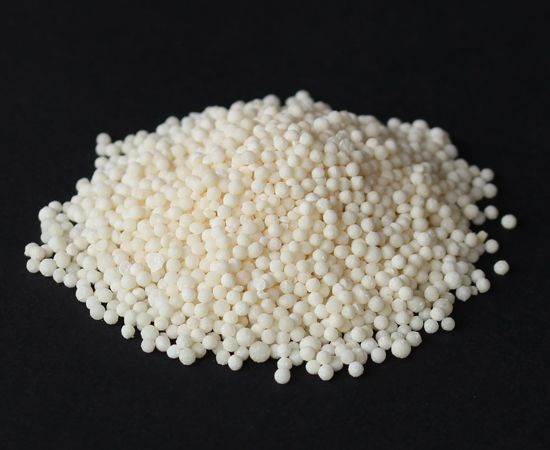
Increasing protein supply of ruminants – Retard urea products
Retard urea for dairy cows
For ruminants to improve their protein supply. Due to the special
production technology realizing so called retard protein form urea dissolv
and hydrolyses slowly and uniformly in the rumen.
INSTRUCTION FOR USE:
Urea shall only be fed to animals with a functional rumen. Feeding urea to the maximum level dose should be done gradually. The maximum content of urea should be only fed as part of diets rich in easily digestible carbohydrates and low in soluble nitrogen. Maximum 30% of total nitrogen in the daily ration should come from urea-N.
Products for the prevention of metabolic diseases
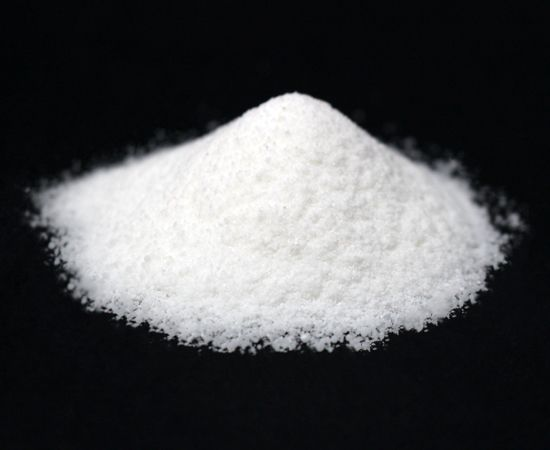
Rumen protected and plain niacin products (70%) for ruminants
The physiological importance of niacin in animal organisms has been a well-known fact for a long time. Niacin is a constituent of two coenzymes, the nicotinamide-adenine-dinucleotide (NAD) and the nicotinamide-adenine-dinucleotide-phosphate (NADP). These coenzymes – connected to enzyme-proteins – transport the electrons in the synthesis and degradation of proteins, fats and carbo-hydrates, therefore they play an important role in the metabolism of the mentioned nutrients. There are just a few data mentioned in literature about the niacin-content of the feed to be utilized, thus it is difficult to determine exactly the niacin-supply of the ruminants.
Therefore, in practice the feed-portion of the animals is supplemented with niacin, especially in the periods of intensive metabolism (e.g.: in case of dairy cows, the first phase of lactation, weaning, starting the feed fattening, etc.). During the use of niacin, the safety of production increases, the possibility of energy-retention problems reduces. The niacin-content of the used forage significantly influences the niacin-synthesis of rumen-microbes, thus it is advised to dose a certain part of niacin supplemental in a rumen-protected form, which cannot or just to a limited extent can degrade by the microbes.
The rumen-protected niacin products of Adexgo Kft. are decisively utilized in the small intestine, which means a direct niacin-source in the crucial period of production. According to the experiments the rumen-protected niacin has a positive effect on N-metabolism as well.
The proportion utilized in the rumen has a positive effect on the operation of rumen-microbes. In case of plain niacin supplement, the propionic acid-concentration of rumen fluid increases, which – as a glucogenetic material – improves the glucose supply of ruminants, and it improves the effectiveness of lactose synthesis. The increasing propionic acid proportion improves the animals’ energy-balance; it also decreases the methane production in the rumen. Furthermore the niacin-supplement reduces the lactic acid concentration of the rumen fluid and it increases the pH-value of the rumen fluid.
According to the literature, niacin feeding – which is utilized both in the rumen and in the small intestine – has positive effect on rumen fermentation, on prevention of metabolic diseases (e.g.: acidosis, ketosis) and on N-metabolism and these positive effects occur simultaneously.
THE ROLE OF NIACIN IN PREVENTING AND IN TREATING KETOSIS
Ketosis is a metabolic disease, in which the quantity of ketone-bodies (acetoacetate, β-hydroxybutyrate, acetone) and the free fatty acids increase in the blood-plasma, while the glucose-concentration decreases. According to some surveys more than 50% of the high yielding dairy cows suffer from sub-clinical ketosis. In case of ketosis the appetite, the feed-intake, the live weight and the milk production of the animals decrease.
Around the period of calving, in case of feeding 6-12 g niacin daily and per animal, the glucose concentration of the blood-plasma increases, the proportion of ketone-bodies and free fatty acids decreases while the milk production also increases. The favourable effects can be traced back to the antilipolytic effect of niacin on adipose tissues (for example: it intensifies glucose transport to the liver cells through diffusion; it reduces the c-AMP-content of adipose and other tissues; it lessens the butyrin concentration in the rumen, etc.).
… is SR Energy, which is a rumen stable sugar:
It released in the rumen slowly and gradually and it has a very positive effect to the rumen fluid
The special covering technology provides a targeted utilization of the main component
(sugar) in the digestive tract of animals.
slowly releases in the rumen
Due to the limitations on increasing the feeding with fodder, in case of high yielding dairy cows, it is difficult to compose a feed dosage that completely covers the energy needs of these animals in their first third of lactation. In such cases, as a consequence of an inappropriate gluconeogenesis, in the long run the extent of glucose-synthesis limits the production of milk, which may result in developing glucose deficiency in some cases. The glucose-deficit condition may cause numerous metabolic diseases (e.g.: ketosis, acidosis).
It is a well-known fact that dairy cows have to produce a significant amount of glucose in the liver, because a great amount of glucose absorbed from the small intestine is utilized in cell-metabolism. Besides the national corn silage – and corn meal – based feeding, the further problem is that a certain part of the starch arriving in the small intestine will leave through the faecal matter without being digested.
With the increase of the lactation production of the cows, the production of glucose will more frequently be the limiting factor of milk-production. Thus the newest improvement of our company is such a rumen-protected glucose product, which can be an effective tool in the improvement of glucose supply.